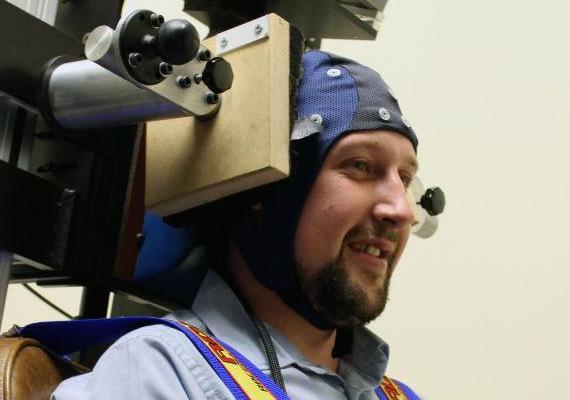
Some people can get motion sickness from being in moving vehicles such as cars or airplanes. But, a new device could stop motion sickness by suppressing some signals in the brain. Motion sickness occurs when the motion you sense with your inner ear is different from the motion you see. Symptoms of motion sickness are dizziness, nausea and vomiting. People have tried different ways to prevent the condition, including wrist bands and anti-nausea drugs. But often, nothing works. Now, scientists at Imperial College London are working on a device to counteract motion sickness.
Michael Gresty is an expert on the condition. "You imagine being on a bicycle or motorbike; you go around the corner, you lean into the corner, which remains perfectly upright in physics."
You don't do that in a car. You don't do that on a ship. You're actually struggling to find out what is upright and what's the best way of dealing with it. The device sends a weak electrical current through electrodes placed on a person’s head. The electric current appears to cause the brain to suppress signals that affect the inner ear.