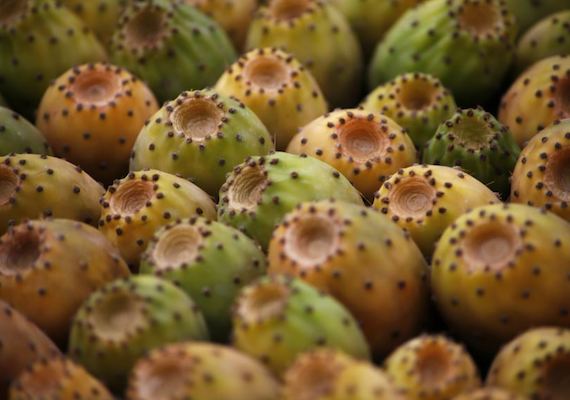
In the future, chemicals from plants found in and around the Mediterranean may be used to help treat people with brain diseases such as Alzheimer's and Parkinson's. These two diseases are age-related and neurodegenerative. Neurodegenerative relates to the degeneration of nervous tissue, especially the brain. People suffering from Alzheimer's and Parkinson's have deposits of sticky plaque in their brains. Over time, this plaque reduces brain function. Eventually, it causes death. But scientists say the plaque deposits can be reduced with chemicals from plants, including prickly pear and brown seaweed. Scientists say the chemicals or, extracts appear to replace the harmful, sticky plaque with deposits that are less harmful. These scientists are researchers at the University of Malta and the National Center of Scientific Research at the University of Bordeaux. They tested the chemical extracts of the plants on a substance called Brewer's yeast. This yeast had plaque deposits similar to those seen in Alzheimer's disease. Scientists say the health of the yeast improved greatly after exposure to the chemical extracts. Researchers then tested the extracts in fruit flies that were genetically changed to develop symptoms of Alzheimer's. They found that when the flies were given brown seaweed extract, their lifespans increased by two days. Prickly pear helped the insects live four days longer. That may not sound like a long time. However, the researchers remind us that one day in the life of a fruit fly is equal to one human year. Researchers also noted that movement in some diseased insects improved. They reported their findings in the journal Neuroscience Letters.
Title: Mediterranean Plants May Help Brain Diseases
Content: <div id='article-page'><div id='article-content' data-media-url='//news-app-staging.s3.amazonaws.com' data-base-url='//news-app-staging.herokuapp.com' data-sound-name='https://news-app-production.s3.amazonaws.com/articles/1696/brain_plants.m4a' data-capture-url='//staging.analytics.lingraphica.com/events/capture_news' data-article-title='Mediterranean Plants May Help Brain Diseases' data-article-id='2214'><script src='//news-app-staging.herokuapp.com/javascripts/getscripts.js'></script><link rel='stylesheet' href='//news-app-staging.herokuapp.com/stylesheets/article.css' type='text/css' /><div class='article'><p><span data-start-time='0' data-end-time='16688'>In the future, chemicals from plants found in and around the Mediterranean may be used to help treat people with brain diseases such as Alzheimer's and Parkinson's.</span> <span data-start-time='16688' data-end-time='23500'>These two diseases are age-related and neurodegenerative.</span> <span data-start-time='23500' data-end-time='32708'>Neurodegenerative relates to the degeneration of nervous tissue, especially the brain.</span> <span data-start-time='32708' data-end-time='42208'>People suffering from Alzheimer's and Parkinson's have deposits of sticky plaque in their brains.</span> <span data-start-time='42208' data-end-time='47333'>Over time, this plaque reduces brain function. </span> <span data-start-time='47333' data-end-time='51229'>Eventually, it causes death.</span> <span data-start-time='51229' data-end-time='64479'>But scientists say the plaque deposits can be reduced with chemicals from plants, including prickly pear and brown seaweed.</span> <span data-start-time='64479' data-end-time='76917'>Scientists say the chemicals or, extracts appear to replace the harmful, sticky plaque with deposits that are less harmful.</span> <span data-start-time='76917' data-end-time='89938'>These scientists are researchers at the University of Malta and the National Center of Scientific Research at the University of Bordeaux.</span> <span data-start-time='89938' data-end-time='98208'>They tested the chemical extracts of the plants on a substance called Brewer's yeast.</span> <span data-start-time='98208' data-end-time='106083'>This yeast had plaque deposits similar to those seen in Alzheimer's disease.</span> <span data-start-time='106083' data-end-time='115646'>Scientists say the health of the yeast improved greatly after exposure to the chemical extracts.</span> <span data-start-time='115646' data-end-time='126146'>Researchers then tested the extracts in fruit flies that were genetically changed to develop symptoms of Alzheimer's.</span> <span data-start-time='126146' data-end-time='135375'>They found that when the flies were given brown seaweed extract, their lifespans increased by two days.</span> <span data-start-time='135375' data-end-time='141750'>Prickly pear helped the insects live four days longer.</span> <span data-start-time='141750' data-end-time='145875'>That may not sound like a long time.</span> <span data-start-time='145875' data-end-time='156063'>However, the researchers remind us that one day in the life of a fruit fly is equal to one human year.</span> <span data-start-time='156063' data-end-time='164521'>Researchers also noted that movement in some diseased insects improved.</span> <span data-start-time='164521' data-end-time='170771'>They reported their findings in the journal Neuroscience Letters.</span> </p></div><div class='control-buttons-sticky' style='display:none;'><div class='control-buttons'><button title='Back' class='back' disabled='disabled'></button><button title='Play' class='play' disabled='disabled'></button><button title='Pause' class='pause' style='display:none;'></button><button title='Forward' class='forward' disabled='disabled'></button><button class='finished-reading' style='display:none;'>Done</button></div></div></div><div id='article-media'><div id='media-image'><img src='https://news-app-production.s3.amazonaws.com/articles/1696/brain_plants.jpg'/></div></div><div id='question-content' style='display:none;'><div class='vocabulary_question question-container' data-question-id=8150 data-hint-location='32708' style='display:none;'><div class='question' data-sound-name='https://news-app-production.s3.amazonaws.com/articles/1696/what_does_plaque_mean.m4a'>What does plaque mean?</div><div class='choices' data-correct-choice='a change in brain tissue'><div class='choice' data-sound-name='https://news-app-production.s3.amazonaws.com/articles/1696/scientific_research.m4a'><span>scientific research</span></div><div class='choice' data-sound-name='https://news-app-production.s3.amazonaws.com/articles/1696/cause_of_death.m4a'><span>cause of death</span></div><div class='choice' data-sound-name='https://news-app-production.s3.amazonaws.com/articles/1696/a_change_in_brain_tissue.m4a'><span>a change in brain tissue</span></div><div class='choice' data-sound-name='https://news-app-production.s3.amazonaws.com/articles/1696/exposure_to_chemicals.m4a'><span>exposure to chemicals</span></div></div></div><div class='multiple_choice_question question-container' data-question-id=8151 data-hint-location='47333' style='display:none;'><div class='question' data-sound-name='https://news-app-production.s3.amazonaws.com/articles/1696/what_do_plaque_deposits_cause.m4a'>What do plaque deposits cause?</div><div class='choices' data-correct-choice='death'><div class='choice' data-sound-name='https://news-app-production.s3.amazonaws.com/articles/1696/activity.m4a'><span>activity</span></div><div class='choice' data-sound-name='https://news-app-production.s3.amazonaws.com/articles/1696/injury.m4a'><span>injury</span></div><div class='choice' data-sound-name='https://news-app-production.s3.amazonaws.com/articles/1696/death.m4a'><span>death</span></div><div class='choice' data-sound-name='https://news-app-production.s3.amazonaws.com/articles/1696/memory.m4a'><span>memory</span></div></div></div><div class='sentence_completion_question question-container' data-question-id=8152 data-hint-location='42208' style='display:none;'><div class='question' data-sound-name='https://news-app-production.s3.amazonaws.com/articles/1696/over_time_plaque_reduces__blank__function.m4a'>Over time plaque reduces <span class='blank'>brain</span> function.</div><div class='choices' data-correct-choice='brain'><div class='choice' data-sound-name='https://news-app-production.s3.amazonaws.com/articles/1696/brain.m4a'><span>brain</span></div><div class='choice' data-sound-name='https://news-app-production.s3.amazonaws.com/articles/1696/plant.m4a'><span>plant</span></div><div class='choice' data-sound-name='https://news-app-production.s3.amazonaws.com/articles/1696/lung.m4a'><span>lung</span></div><div class='choice' data-sound-name='https://news-app-production.s3.amazonaws.com/articles/1696/heart.m4a'><span>heart</span></div></div></div><div class='question-buttons'><button class='skip-button'></button><button class='hint-button'></button><button class='speak-button'></button></div></div></div>
Sound Name: https://news-app-production.s3.amazonaws.com/articles/1696/brain_plants.m4a
Preview