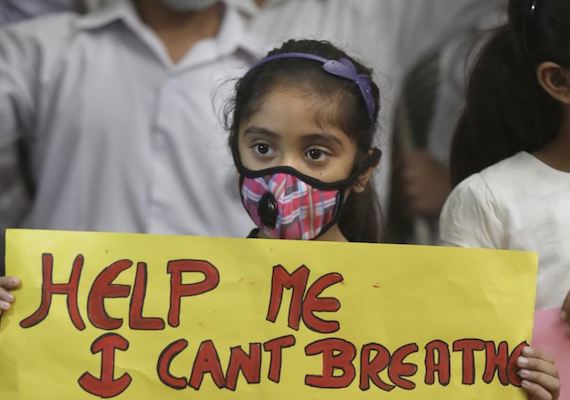
Environmental pollution kills 1.7 million children under the age of five every year worldwide. This is according to the World Health Organization (WHO). The WHO warns that child deaths will increase greatly if pollution continues to worsen. Dr. Margaret Chan is the WHO Director-General. In a press release statement, Chan said, "A polluted environment is a deadly one particularly for young children." She explains that "their developing organs and immune systems, and smaller bodies and airways, make them especially vulnerable to dirty air and water." The most common causes of death among children aged one month to five years are diarrhea, malaria and pneumonia. This is according to the WHO. The organization also says reducing environmental risks can prevent such deaths. This means providing access to safe water and sanitation, limiting exposure to dangerous chemicals, and improving waste management. However, of all the environmental pollutants, air pollution is being called the most dangerous. The WHO estimates that air pollution is responsible for about 6.5 million premature, or early, deaths every year. That number includes nearly 600,000 deaths of children under age five. Most of these deaths take place in developing countries.
What does vulnerable mean?
resistant
childhood disease
easily harmed
polluted water
Where do most deaths take place?
the environment
developing countries
the United States
around the world
Reducing environmental risks can prevent such deaths.
environmental risks
immune systems
air restrictions
coal legislation