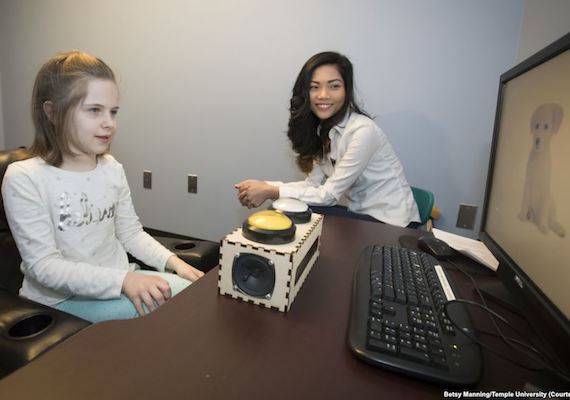
Did you ever wonder why you have no memory of when you were a baby or very young child? Researchers in the United States are investigating this question. The researchers work at Temple University in Philadelphia, Pennsylvania. The question of why adults do not remember how they learned to walk or talk has long been a mystery. Nora Newcombe is a psychology professor at the university. She joined Zoe Ngo, a Temple graduate student, in the memory research project. Newcombe says: “You know you learned how to walk and talk, but the funny thing is that you don’t remember when and how you learned this.” The Temple University study involved computer-based tests. The tests were designed to work like games. They were given to 32 four-year-olds, 32 six-year-olds and 50 young adults. The tests measured the memory process that helps people recognize differences between experiences. For example: A walk with your dog when you saw a friend, and a different walk without your dog or when you did not see your friend. “In order to remember those kind of autobiographical events, you need to relate one element to another,” Newcombe said. She notes that many people often take walks in a favorite park, but the experience might differ one day from another. Special memory skills are needed to remember when different events happen, like meeting a friend, she said. This differentiation is known as relational memory. This skill would also be important to remembering where you parked your car today, compared to where you left it yesterday or last week. The second test involved showing the test subjects a number of photographs. The children and young adults taking the test were asked to compare the first group of photos with a second set of pictures. Sometimes, the two sets of photos were the same. But other times, they were different. Remembering differences in objects, such as pictures, is known as pattern separation. The results showed that in both tests, six-year-olds demonstrated far better memory than 4-year olds. The six-year-olds performed about as well as the young adults on the two tests. The two tests suggest that memory skills are more advanced for six-year-olds than 4-year-olds. That might help explain why adults do not remember when they learned to walk or talk. But they do remember their third, fourth or fifth birthdays.
Title: Why Can’t We Remember Our First Few Years of Life?
Content: <div id='article-page'><div id='article-content' data-media-url='//news-app-staging.s3.amazonaws.com' data-base-url='//news-app-staging.herokuapp.com' data-sound-name='https://news-app-production.s3.amazonaws.com/articles/1839/early_memories.m4a' data-capture-url='//staging.analytics.lingraphica.com/events/capture_news' data-article-title='Why Cant We Remember Our First Few Years of Life?' data-article-id='2356'><script src='//news-app-staging.herokuapp.com/javascripts/getscripts.js'></script><link rel='stylesheet' href='//news-app-staging.herokuapp.com/stylesheets/article.css' type='text/css' /><div class='article'><p><span data-start-time='0' data-end-time='7729'>Did you ever wonder why you have no memory of when you were a baby or very young child?</span> <span data-start-time='7729' data-end-time='13188'>Researchers in the United States are investigating this question.</span> <span data-start-time='13188' data-end-time='20479'>The researchers work at Temple University in Philadelphia, Pennsylvania.</span> <span data-start-time='20479' data-end-time='30708'>The question of why adults do not remember how they learned to walk or talk has long been a mystery.</span> <span data-start-time='30708' data-end-time='36854'>Nora Newcombe is a psychology professor at the university.</span> <span data-start-time='36854' data-end-time='44396'>She joined Zoe Ngo, a Temple graduate student, in the memory research project.</span> <span data-start-time='44396' data-end-time='55458'>Newcombe says: “You know you learned how to walk and talk, but the funny thing is that you don’t remember when and how you learned this.”</span> <span data-start-time='55458' data-end-time='61313'>The Temple University study involved computer-based tests.</span> <span data-start-time='61313' data-end-time='65917'>The tests were designed to work like games.</span> <span data-start-time='65917' data-end-time='75458'>They were given to 32 four-year-olds, 32 six-year-olds and 50 young adults.</span> <span data-start-time='75458' data-end-time='84333'>The tests measured the memory process that helps people recognize differences between experiences.</span> <span data-start-time='84333' data-end-time='95333'>For example: A walk with your dog when you saw a friend, and a different walk without your dog or when you did not see your friend.</span> <span data-start-time='95333' data-end-time='105563'>“In order to remember those kind of autobiographical events, you need to relate one element to another,” Newcombe said.</span> <span data-start-time='105563' data-end-time='116042'>She notes that many people often take walks in a favorite park, but the experience might differ one day from another.</span> <span data-start-time='116042' data-end-time='125208'>Special memory skills are needed to remember when different events happen, like meeting a friend, she said.</span> <span data-start-time='125208' data-end-time='130479'>This differentiation is known as relational memory.</span> <span data-start-time='130479' data-end-time='141958'>This skill would also be important to remembering where you parked your car today, compared to where you left it yesterday or last week.</span> <span data-start-time='141958' data-end-time='149354'>The second test involved showing the test subjects a number of photographs.</span> <span data-start-time='149354' data-end-time='160083'>The children and young adults taking the test were asked to compare the first group of photos with a second set of pictures.</span> <span data-start-time='160083' data-end-time='165063'>Sometimes, the two sets of photos were the same.</span> <span data-start-time='165063' data-end-time='168583'>But other times, they were different.</span> <span data-start-time='168583' data-end-time='176625'>Remembering differences in objects, such as pictures, is known as pattern separation.</span> <span data-start-time='176625' data-end-time='186250'>The results showed that in both tests, six-year-olds demonstrated far better memory than 4-year olds.</span> <span data-start-time='186250' data-end-time='193271'>The six-year-olds performed about as well as the young adults on the two tests.</span> <span data-start-time='193271' data-end-time='202521'>The two tests suggest that memory skills are more advanced for six-year-olds than 4-year-olds.</span> <span data-start-time='202521' data-end-time='209417'>That might help explain why adults do not remember when they learned to walk or talk.</span> <span data-start-time='209417' data-end-time='215542'>But they do remember their third, fourth or fifth birthdays.</span> </p></div><div class='control-buttons-sticky' style='display:none;'><div class='control-buttons'><button title='Back' class='back' disabled='disabled'></button><button title='Play' class='play' disabled='disabled'></button><button title='Pause' class='pause' style='display:none;'></button><button title='Forward' class='forward' disabled='disabled'></button><button class='finished-reading' style='display:none;'>Done</button></div></div></div><div id='article-media'><div id='media-image'><img src='https://news-app-production.s3.amazonaws.com/articles/1839/early_memories.jpg'/></div></div><div id='question-content' style='display:none;'><div class='vocabulary_question question-container' data-question-id=8573 data-hint-location='125208' style='display:none;'><div class='question' data-sound-name='https://news-app-production.s3.amazonaws.com/articles/1839/what_does_relational_mean.m4a'>What does relational mean?</div><div class='choices' data-correct-choice='connected'><div class='choice' data-sound-name='https://news-app-production.s3.amazonaws.com/articles/1839/recognize.m4a'><span>recognize</span></div><div class='choice' data-sound-name='https://news-app-production.s3.amazonaws.com/articles/1839/unrelated.m4a'><span>unrelated</span></div><div class='choice' data-sound-name='https://news-app-production.s3.amazonaws.com/articles/1839/connected.m4a'><span>connected</span></div><div class='choice' data-sound-name='https://news-app-production.s3.amazonaws.com/articles/1839/memory.m4a'><span>memory</span></div></div></div><div class='multiple_choice_question question-container' data-question-id=8574 data-hint-location='193271' style='display:none;'><div class='question' data-sound-name='https://news-app-production.s3.amazonaws.com/articles/1839/which_group_had_more_advanced_memory_skills.m4a'>Which group had more advanced memory skills?</div><div class='choices' data-correct-choice='four year olds'><div class='choice' data-sound-name='https://news-app-production.s3.amazonaws.com/articles/1839/four_year_olds.m4a'><span>four year olds</span></div><div class='choice' data-sound-name='https://news-app-production.s3.amazonaws.com/articles/1839/newborn_babies.m4a'><span>newborn babies</span></div><div class='choice' data-sound-name='https://news-app-production.s3.amazonaws.com/articles/1839/older_adults.m4a'><span>older adults</span></div><div class='choice' data-sound-name='https://news-app-production.s3.amazonaws.com/articles/1839/two_year_olds.m4a'><span>two year olds</span></div></div></div><div class='sentence_completion_question question-container' data-question-id=8575 data-hint-location='61313' style='display:none;'><div class='question' data-sound-name='https://news-app-production.s3.amazonaws.com/articles/1839/the_tests_were_designed_to__blank_.m4a'>The tests were designed to <span class='blank'>work like games</span>.</div><div class='choices' data-correct-choice='work like games'><div class='choice' data-sound-name='https://news-app-production.s3.amazonaws.com/articles/1839/work_like_games.m4a'><span>work like games</span></div><div class='choice' data-sound-name='https://news-app-production.s3.amazonaws.com/articles/1839/meet_a_friend.m4a'><span>meet a friend</span></div><div class='choice' data-sound-name='https://news-app-production.s3.amazonaws.com/articles/1839/score_children.m4a'><span>score children</span></div><div class='choice' data-sound-name='https://news-app-production.s3.amazonaws.com/articles/1839/test_memories.m4a'><span>test memories</span></div></div></div><div class='question-buttons'><button class='skip-button'></button><button class='hint-button'></button><button class='speak-button'></button></div></div></div>
Sound Name: https://news-app-production.s3.amazonaws.com/articles/1839/early_memories.m4a
Preview