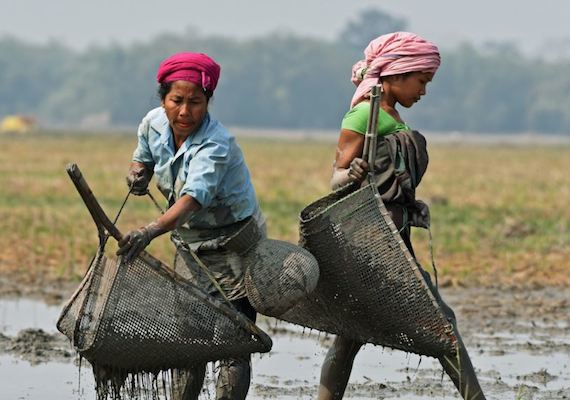
Fishing has long been an occupation where most workers are men. Yet a recent study found that women are responsible for a substantial part of the world’s fishing industry. The study suggests that their work in fisheries is changing. Women have jobs processing and marketing seafood. They also collect clams and other shellfish. Sara Skamser has worked in and around commercial fishing for much of her adult life. When she was in her early twenties, Skamser started earning money by fishing and crabbing along the coast of Oregon. Eventually, she wanted to work on bigger fishing boats to earn more money. But the operators of those boats never offered her a job. She said they would all tell her “no”, and say things like, ‘I know you could do the job, and you're probably stronger than me. But I don't think my wife would like it.’ Others would say, ‘I would feel terrible if you got hurt on my boat.’ Skamser said she received rejections like these in the early 1980s. Today, women hold fewer than four percent of the commercial fishery permits approved by state governments in the northwestern United States. Gender inequality is also an issue in other countries. In Mexico, Peru, Senegal and Vietnam, four percent or fewer of the workers on fishing boats are women. However, new research suggests that things are beginning to change.
What does substantial mean?
go fishing
large amount
less than usual
more important
What does the study suggest?
genders are equal
men are better
women should not fish
work is changing
Women collect clams and shellfish.
crabs and fish
fishing stories
clams and shellfish
larger paychecks