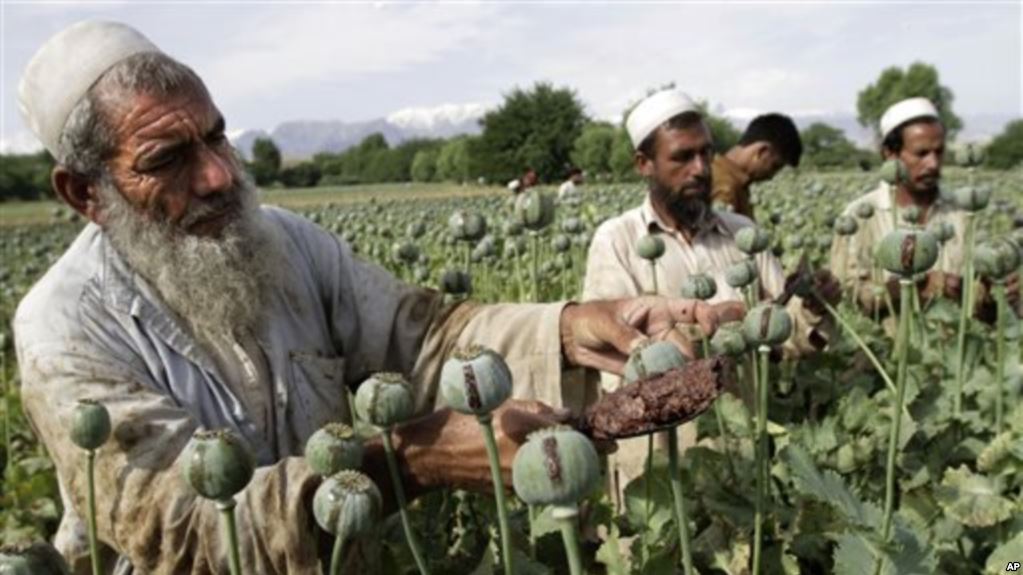
A new United Nations report finds that opium-poppy cultivation in Afghanistan is now 20 percent lower than it was in 2017. The report noted a lack of rainfall and falling prices of dry opium across the country. The dried latex form of the poppy plant can be used to make heroin and other opioid drugs. Afghanistan is the world’s leading producer of opium-poppy. The new report said the total land area for growing the plants decreased to 263,000 hectares from an estimated 328,000 hectares in 2017. Yet it was still the second highest measurement for Afghanistan since the U.N. Office on Drugs and Crime, or UNODC, began keeping records in 1994. The potential opium production fell by 29 percent to 6,400 tons from an estimated 9,000 tons in 2017.
What is potential?
someone who treats illnesses in animals
something that can never happen
someone who works in a financial field
something that can happen
Afghanistan is the worlds leading producer of what?
opium-poppy
wheat
sugarcane
peppermint
The dried latex form of the poppy plant can be used to make heroin and other opioid drugs.
medicines
food
fabrics
drugs