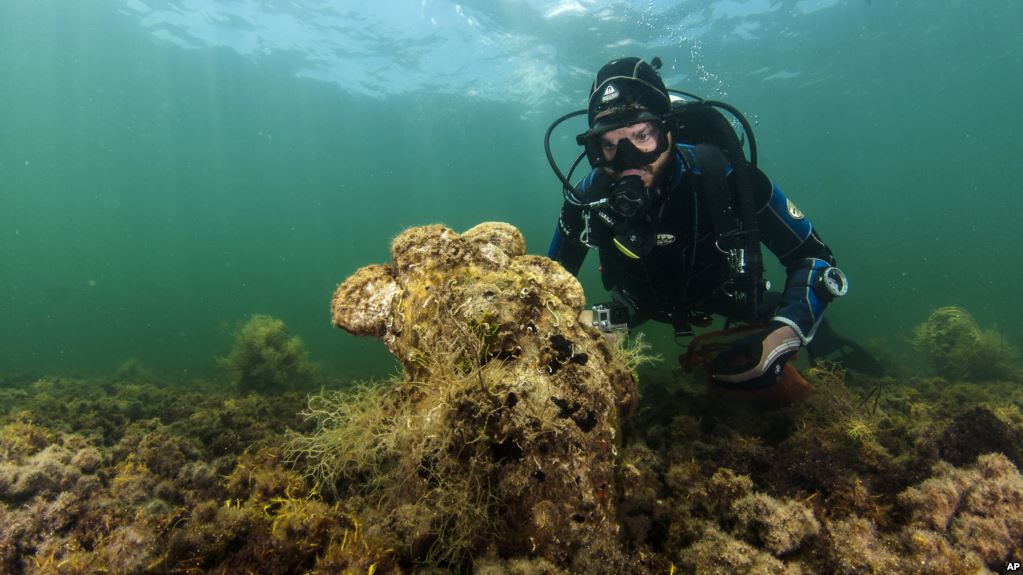
A microscopic organism is causing a huge clam of the Mediterranean Sea to disappear and ocean scientists are worried. The pen shell clam is the largest shellfish in the Mediterranean. The clam can grow to one meter in length. Its shell looks something like a huge feather. For hundreds of years, the clam has provided food and an unusual material, called sea silk, which can be used to make a kind of cloth. The clam also cleans water by filtering out organic material from it. The European Union named the pen shell clam a protected species many years ago. The clam has been overfished and has suffered from pollution and destruction of its waters. A ban on hunting the clam also has been poorly enforced. They are harvested for food and for their unusual, large shells. The pen shells can live for many years, but they take years to reach reproductive age. Now, they are disappearing faster than they can be replaced. A new parasite which first appeared in 2016, has alarmed experts. It is unclear exactly how the parasite kills the clams. Scientists say it appears to attack the pen shell’s digestive system. The clam becomes unable to close its shell and can be attacked by its enemies.
What is a shellfish?
an amount of time or a situation in which something can be done
an animal, such as a crab or oyster, that has a hard outer shell and that lives in the water
an annual salary
an appetizer
Its shell looks something like a huge what?
ear
chair
feather
rug
They are harvested for food and for their unusual, large shells
shells
eyes
feet
stomachs