Gankhuyag Natsag, also known as Ganna, spends his time spreading Mongolian culture around the world. He does so by creating special masks. The masks are representations of characters that appear in traditional Buddhist dances known as Tsam. The Tsam tradition dates back to Tibet in the 600s. It did not get to Mongolia until 1811. About 120 years later, the government of the former Soviet Union banned religious activities in Mongolia. Ganna says the Soviets “destroyed more than 800 temples, including many Buddhist objects.” He added that a lot of masks were destroyed during that time. Only about 30 masks survived. I first made the Old White Man mask in 1997. Then I decided to make all 108 masks. It took me 10 years. In 2007, I completed all 108 Tsam ritual dance masks." Ganna was born in Ulaanbaatar, the capital of Mongolia. He came to the United States in 2002. He has been making Buddhist ritual dance masks for more than twenty years. Each mask represents a different character and the part they play.
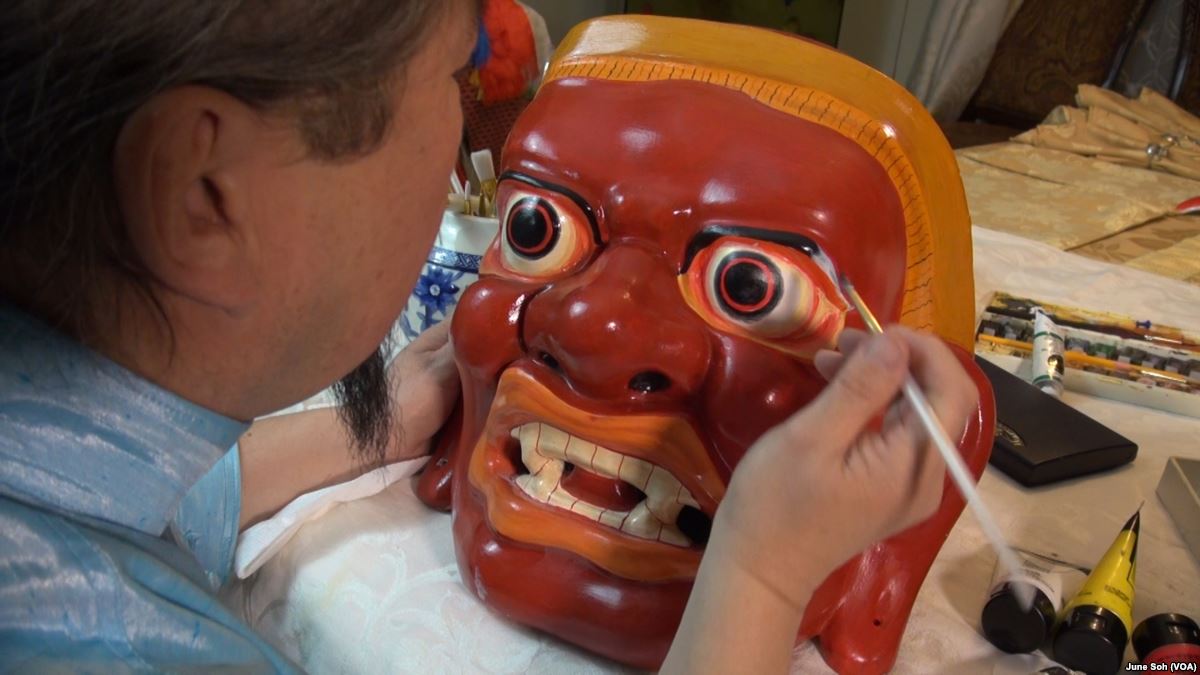
What is a mask?
a type of prayer
a covering for your face or for part of your face
a robe that reaches the floor
a covering for windows in a house
It took him 10 what?
years
months
weeks
decades
Each mask represents a different character and the part they play.
mother
character
animal
computer