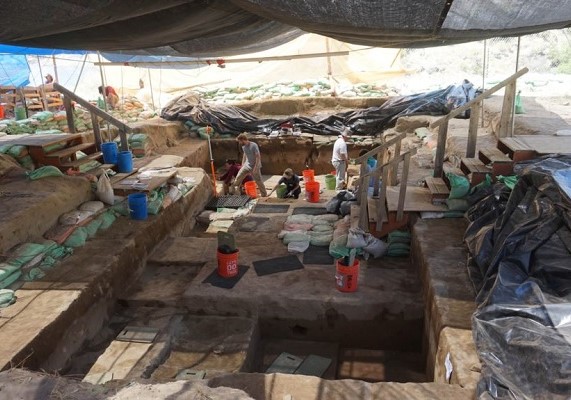
Stone tools and pieces of animal bone from about 16,600 years ago are the earliest evidence yet of human beings in the New World, scientists say. The objects were found in the western United States. They were recovered from an archeological site called Cooper’s Ferry on the Salmon River near the town of Cottonwood, Idaho. Scientists used radiocarbon dating methods to find out how old these artifacts are. The scientists say people lived in or passed through the area at a time when ice covered large parts of North America. That period of time is known as Earth’s Ice Age. During the period, big mammals like mastodons, saber-toothed cats and camels lived in North America.
What does archeology mean?
early evidence of life
the study of human history
method to determine age
covered by ice
What objects were found?
cats and camels
tools and bone pieces
entire human beings
modern artifacts
The period of time is known as Earth's Ice Age.
The Dinosaur Era
Cats in North America
Earth's Ice Age
Carbon Dating Service