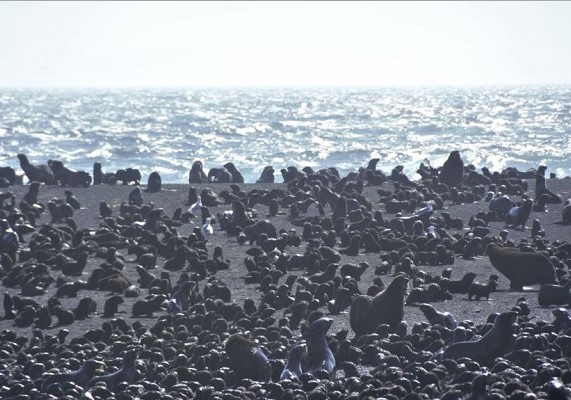
For 30 years, Alaska’s northern fur seal population has not increased. But the ocean mammals are appearing in growing numbers in one unlikely place: a small island that forms the tip of an active undersea volcano. Bogoslof Island is distant and unpopulated. It sits in the eastern Bering Sea. Openings on the ground there release mud, steam and sulfurous gases. But northern fur seals find the island to be a good place for giving birth and raising their young. Tom Gelatt leads a group at the United States’ National Oceanic and Atmospheric Administration, or NOAA. His group studies northern fur seals. Gelatt calls the population growth on Bogoslof extraordinary. Most of the world’s 1.1 million northern fur seals live in the eastern Bering Sea area. The animals live in the ocean from November to June and return to land in summer, when they breed and nurse pups.
What does extraordinary mean?
population growth
good for families
very unusual
release mud and steam
What is the island a part of?
an undersea colony
the tip of an iceberg
an active volcano
a northern strait
The island is a good place for giving birth.
spending the winter
distant and populated
smaller numbers
giving birth