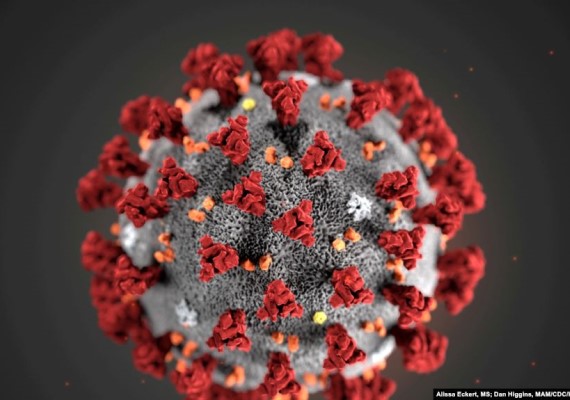
Studies of genetic material from thousands of samples of the novel coronavirus show that it is changing. Experts say those findings might affect the current pandemic and efforts to develop vaccines and treatments. The GISAID Initiative is a partnership between a not-for-profit group and the governments of Germany, Singapore, and the United States. The initiative was formerly called the Global Initiative on Sharing All Influenza Data. It collects records of genetic information on influenza viruses and releases them to the public. Researchers in the United States used GISAID data to follow genetic changes, or mutations, in the “spike” of the new coronavirus. The spike is the part of the coronavirus that gives it its unusual shape. The researchers said they discovered 14 such mutations early in their investigation at the Los Alamos National Laboratory. They noted that one, called D614G, was “of urgent concern” because it may make the disease more infectious.
What is a virus?
a bacterium that is highly infectious and causes significant destruction to living cells
a new vaccine that is being tested to prevent COVID-19
a submicroscopic infectious agent that replicates only inside the living cells of an organism
the equipment used to improve breathing function in patients
How many virus mutations were discovered by the investigators at the Los Alamos National Laboratory?
6
9
10
14
The spike on its surface is part of the coronavirus that gives it its unusual shape.
shape
color
smell
movement