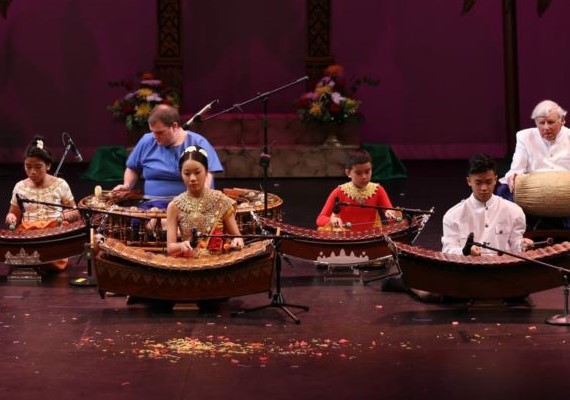
Love songs, dance tunes, bedtime songs for children, all of these kinds of music share patterns across cultures, a new study finds. Researchers who set up the study say this suggests a commonality in the way human minds create music. The findings were reported in Science magazine. Samuel Mehr was the lead author of a report on the study. He is a research associate in psychology at Harvard University in Massachusetts. Mehr noted that the study supports “the idea that there is some sort of set of governing rules for how human minds produce music worldwide.” He and other researchers studied musical recordings and ethnographic records from 60 societies around the world. They looked at a mix of very different cultures, such as the Highland Scots in Scotland, Nyangatom nomads in Ethiopia, and Aranda hunter-gatherers in Australia. The researchers found that music had a link with behaviors such as dancing and loving, among others. Manvir Singh is a graduate student in Harvard’s department of human evolutionary biology and a co-author of the study. Singh noted that children’s’ lullabies were likely to be slow and fluid while dance songs tended to be fast and lively. Another co-author of the study was Luke Glowacki, an anthropology professor at the Pennsylvania State University. He noted that the social purpose of the music influences how it sounds.
What magazine published the findings mentioned in this article?
Time Magazine
People Magazine
AARP Magazine
Science Magazine
What is the theme of this article?
There is a worldwide effort to discover a COVID-19 vaccine
Music shares patterns across different cultures
Not everyone likes music
Different cultures have different child rearing techniques
Lullabies around the world tend to be slow.
fast
slow
lively
rapid