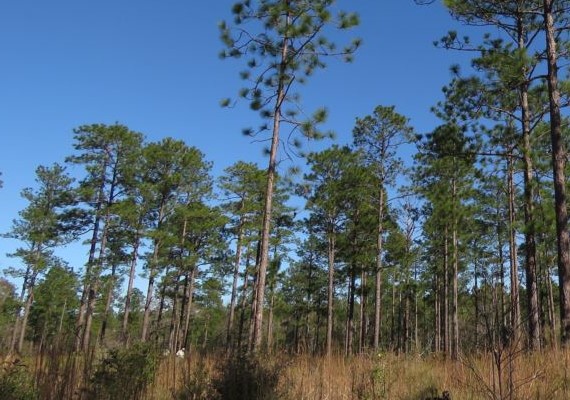
When European settlers came to North America, grassy savannas secured by tall pine trees with footlong needles covered much of the southern part of the continent. Native Americans liked using the needles to make baskets. Hundreds of plant and animal species lived beneath the trees. Yet by the 1990s, these grasslands and the pine trees above them were almost gone. People had cut the trees for farms and development. The animals were endangered. Now, two foresters, Rhett Johnson and Dean Gjerstad, are working with landowners, government agencies and nonprofits in nine coastal states from Virginia to Texas. Their goal is to bring back the longleaf pine. The name comes from the tree’s long needles. Johnson and Gjerstad compare themselves to an American folk hero. "We were like Johnny Appleseed -- we were on the road all the time," said Johnson of the years they spent spreading the word about the tree's importance.
Who was Johnny Appleseed?
the U.S. inventor of applesauce
a man who planted apple trees and shared seeds with U.S. settlers
the first person to orbit the moon
a civil rights protester
What did Native Americans like to make using longleaf pine needles?
jewelry
horse saddles
blankets
baskets
The name of the tree featured in this article is the Longleaf pine.
Longleaf pine
Red pine
Ponderosa pine
White pine