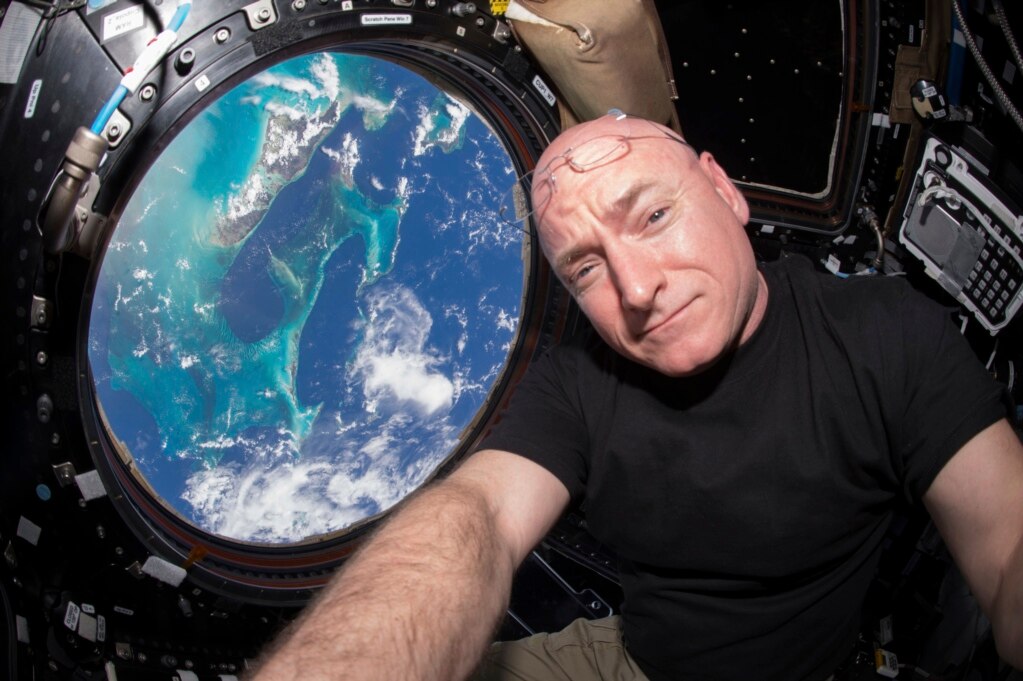
A new study suggests that long periods in space can cause the human heart to shrink. The study -- by a team of American researchers -- comes as the U.S. makes plans to build a long-term base on the moon and prepares to send astronauts to Mars. Part of the study was based on the experiences of retired astronaut Scott Kelly. The U.S. space agency NASA says that during his career, Kelly spent more time in space than any other American astronaut. One of Kelly’s stays aboard the International Space Station (ISS) lasted 340 days. Researchers from the University of Texas’ Southwestern Medical Center (UT Southwestern) in Dallas examined physical data collected during Scott’s long stay aboard the ISS. The goal was to learn the effects of weightlessness on heart health and performance. The team found that during Kelly’s stay in space, the left ventricle of his heart shrank about 0.74 grams per week. Dr. Benjamin Levine is a professor of internal medicine at UT Southwestern. He was the leader of the research. In a statement, he explained that because of the conditions in space, the heart does not have to work as hard to pump blood uphill from the feet. Over time, this can cause shrinkage. The heart has to work harder to keep blood flowing as it works against gravity, Levine explained. This permits the heart to keep its size and perform effectively. In an effort to keep their muscles and organs healthy in space, astronauts are required to perform different kinds of exercises throughout their stay.
How is the word shrinkage defined?
The act or process of becoming smaller
The act or process of becoming larger
When something stays the same size
The amount of fluid in the body
How do astronauts attempt to keep their muscles and organs healthy in space?
Eating candy
Soaking in a hot tub
Exercising
Reading books
The study -- by a team of American researchers -- comes as the U.S. makes plans to build a long-term base on the moon and prepares to send astronauts to Mars.
Jupiter
Mars
Neptune
France