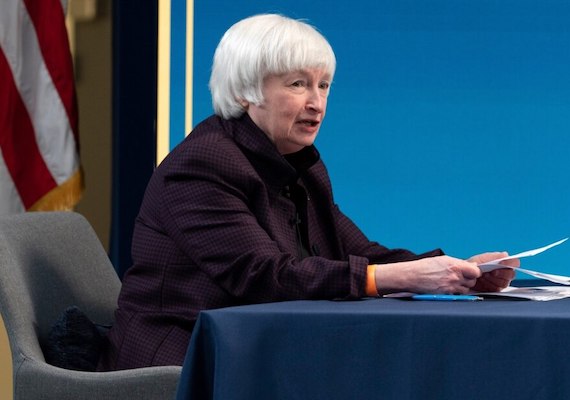
Women now have many of the jobs controlling the world’s largest economy. And they are trying to fix it. Treasury Secretary Janet Yellen, Commerce Secretary Gina Raimondo and U.S. Trade Representative Katherine Tai hold top positions in President Joe Biden’s administration. Many of his economic advisers also are women. This change may already be affecting economic policy. A new $2.3 trillion spending plan was introduced by Biden last week. It includes $400 billion to finance the “care economy,” which supports home- and community-based jobs taking care of children and older people. This part of the economy involves work usually done by women and has largely been ignored for many years. Biden’s spending plan also includes hundreds of billions of dollars more to fix racial inequalities, as well as inequalities between rural Americans and those living in cities. “In the end, it might be that this bill makes 80 years of history: it begins to fix the structural problems,” Yellen wrote on Twitter. She added: “This is just the start for us.” Some experts say women leaders can bring a new way of examining economic policy. “When you’re different from the rest of the group, you often see things differently,” said Rebecca Henderson. She is a professor at Harvard Business School and published a book called Reimagining Capitalism in a World on Fire. “We’re in a moment of enormous crisis. We need new ways of thinking,” Henderson added.
What is the definition of the word enormous?
Extremely large
Slightly above average in size
Extremely small
Excitable
What is the cost of President Biden's spending plan introduced last week?
$2.3 trillion
$1 billion
$1,776 million
$100 trillion
Many of his economic advisers also are women.
economic
dance
clothing
war