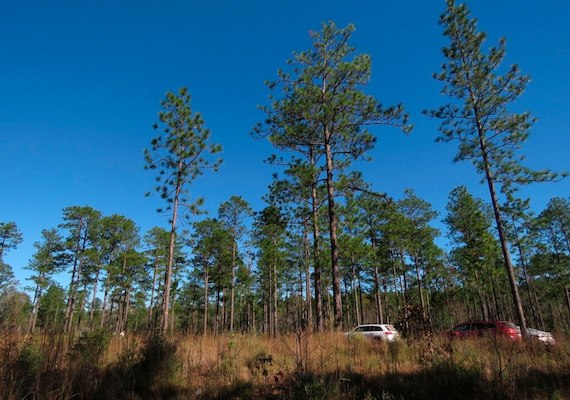
The longleaf pine tree has deep connections with the history and life of the eastern part of America. Forests of these trees once covered two-thirds of the southeastern United States. About 95 percent of those forests were lost in the past 100 years. Many of the forests were cut for their wood, but now they are returning, with the help of government programs that build ties with private landowners. The wood of the tree is very strong. Most buildings built in the southern U.S. from the 1800s contained longleaf pine wood. Today, after a building made with longleaf pine is no longer wanted, people are re-using the wood because it is still good and resists water and insect damage. The longleaf pine also captures carbon dioxide in the air. It stores the substance in its wood. So, the tree is valuable to the environment as a way to store carbon. In addition, the pine forests are places for animals to live. The U.S. government has several programs to protect and expand longleaf pine forests. One is the Safe Harbor Program. It uses voluntary agreements with private landowners to help endangered animals. One such agreement protects the red-cockaded woodpecker and also lets landowners use their land, as long as the birds and other related animals can safely live on it. Now, farmers and landowners in the Southeastern U.S. are growing new longleaf pine trees. Instead of cutting the trees to use as building materials, they are finding ways to make money from the forest of living trees. One way to get income is by selling the leaves, or needles, of the trees as a ground cover.
What does the word resist mean?
To withstand the force or effect of
To go on resolutely or stubbornly in spite of opposition
To yield
To require
Roughly what percentage of longleaf pine forests were lost in the past 100 years?
95 percent
100 percent
10 percent
50 percent
The longleaf pine tree has deep connections with the history and life of the eastern part of America.
America
Israel
Spain
Russia