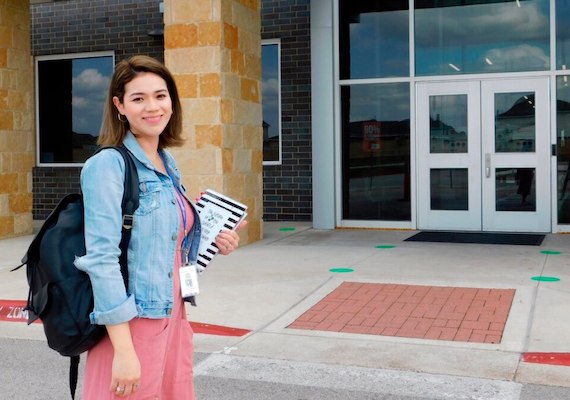
Ana Saul Romero has seen many changes in teaching methods, testing, and technology during her forty years as a teacher. But this year, she said, has given her a lifetime’s worth of changes. In her first-grade class in Manor, Texas, just outside of Austin, only 12 students are inside the classroom. The other half of the class join in from home by video. Romero now stands behind a clear divider working with a pointer, a laptop, and a few other technologies to teach her students. Romero said, “it is difficult with the technology, and I have learned more, but it is not enough, it is never enough.” She said she is from an older generation and she misses the daily, in-person connections with her students. First-year teacher Cindy Hipps is Romero’s teaching partner. She said it was like being “introduced to the ring of fire of teaching.” She added, “I feel like a superwoman now.” This spring marks a year since the coronavirus pandemic shut down schools across the United States. It forced many students, parents, and teachers into virtual classrooms. As states permitted larger groups to gather, some students have since returned to school. Many schools now use a combination of virtual and in-person instruction in class. And teachers like Romero have to learn new ways of teaching all the students.
What does the word virtual mean?
Existing or occurring on computers or on the Internet
Existing or occurring in person
Existing or occurring over the telephone
Something that occurs on another planet
In what state do the teachers in this article work?
Florida
Texas
Arkansas
Pennsylvania
As states permitted larger groups to gather, some students have since returned to school.
school
work
battle
Disney