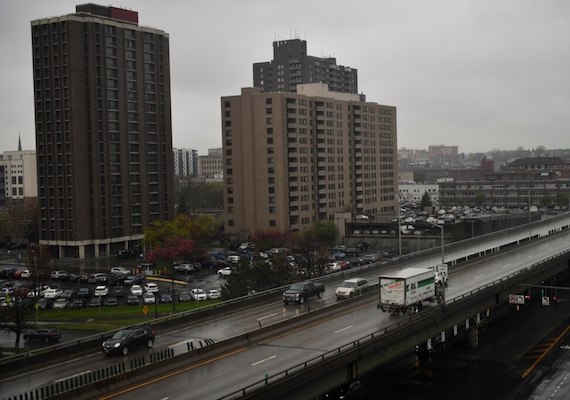
For more than 50 years, Interstate 81 highway has cut through the Southside neighborhood of Syracuse, a city in northwestern New York State. Smoke from vehicles traveling on the elevated road would fall down to the area where most people are Black and poor. Now, New York State wants to replace that part of the elevated highway with a street-level road. The aim is to connect the city's urban areas again. And building could begin as soon as next year. The plan has raised hopes of better times in a city where one in three residents lives in poverty. Some say it could also make up for the damage done to Black residents during the building of Interstate 81 years ago. They were forced to move and have been living under the elevated highway ever since. David Rufus is a lifelong Southside resident. He works as an organizer for the rights group New York Civil Liberties Union. He said, "When they put that highway up, they destroyed this community. Now here's an opportunity to right that wrong by bringing it down. Syracuse was not the only U.S. city where highway-building in the 1950s and 1960s displaced Black residents. Historians are now saying that local officials saw the proposed interstate highway system as an easy way to tear down what they regarded as slum neighborhoods near downtown business areas. The U.S. federal government paid up to 90 percent of the cost of building the new highway. As residents had to move away, it was easier for politicians and business leaders to work on "urban renewal" projects. Joseph DiMento is a law professor at the University of California, Irvine and an expert in the policies of the highway-building. It was a mistake that many cities were making, he said. The reasons they were built were heavily for removal of Blacks from certain areas, he added. Road builders at the time were largely free to ignore environmental, historical, social or other concerns. That permitted them to pay attention only to the most direct way from one point to another. Often, that meant directing those highways through Black neighborhoods, where land was inexpensive and there was little political opposition.
What is a highway?
A short road leading from a public road to a house or garage
A global computer network
A main road, especially one connecting major towns or cities
A system of paying a deposit to secure an item for later purchase
Where is Syracuse?
New York
Pennsylvania
Canada
California
Often, that meant directing those highways through Black neighborhoods, where land was inexpensive and there was little political opposition.
farmland
disputed
nicer
inexpensive