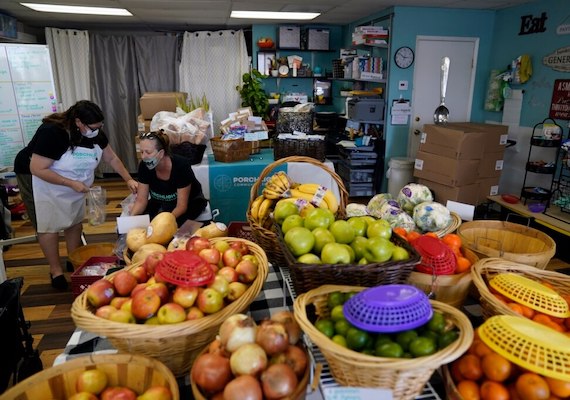
Some Americans do not have enough food to eat. They receive free food from aid organizations, or assistance from the government so they can buy food themselves. Many towns and cities have food pantries, centers where people can get free food. However, hungry Americans who also have food allergies often find themselves with either limited or costly food choices. Common allergies include foods that contain milk or eggs, some kinds of nuts, and flour made from some grains, such as wheat. People with celiac disease, for example, cannot digest gluten, a protein that comes from some grains. The protein causes inflammation that can damage their digestive system and make them sick. A number of organizations in the U.S are working to solve this problem. It became more serious during the COVID-19 crisis as more Americans sought food assistance after losing their jobs. Before the crisis, people with food allergies could visit food pantries and find substitutes for milk or grains that they were allergic to. But COVID-19 shut most food pantry buildings. Visitors could no longer enter and choose the foods they needed. Instead, pantry workers would fill individual boxes with food and give them to the needy as they arrived outside the pantry. Carla Carter works for the National Celiac Association. She said the food pantry process turned into “here’s a box of food, good luck.” Some government assistance programs permit people to choose their own foods at local stores. However, products for people with food allergies often cost two or three times more than usual foods. So, people with allergies get less food as a result.
What are food pantries?
centers where people can get free food
places where people cook their own food
places where people go sit down to purchase a meal cooked by someone else
buildings where food is stored between shipments
What do people with celiac disease have difficulty digesting?
gluten
dairy
fiber
vitamin c
It became more serious during the COVID-19 crisis as more Americans sought food assistance after losing their jobs.
pets
jobs
marbles
friends