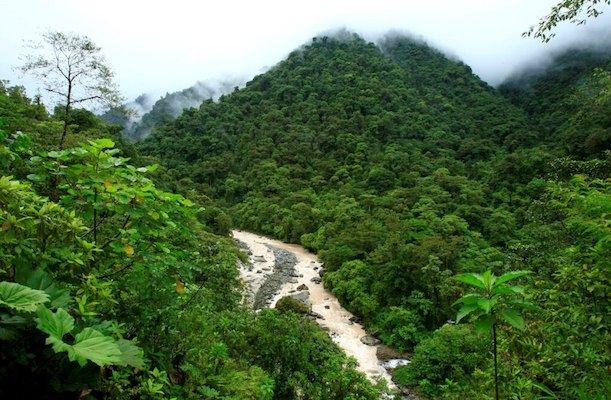
Costa Rican lawmakers are considering a law this week that would permanently ban fossil fuel exploration and production. The popular tourist destination is trying to have zero carbon emissions by 2050. Costa Rica started efforts to ban fossil fuel exploration in 2002 under President Abel Pacheco. This ban was supposed to end in 2014, but was later extended until 2050. The new bill, supported by President Carlos Alvarado’s administration, would take the ban further by making it permanent. Christiana Figueres is a former U.N. climate official and former Costa Rican government official who has supported the bill. She told Reuters, "Our concern now is to remove the temptation, either today or at any time tomorrow, for there to be any current or future government who might think that returning to fossil fuels of the past century is actually a good idea for our country.” Only a few other countries have banned fossil fuel exploration and production. Belize, for example, bans exploration and drilling in all its waters. France also hopes to have a similar ban by 2040. Costa Rica has rich plant and animal life in its jungles and coastal areas. It has never explored or extracted fossil fuels and gets 99 percent of its electricity from renewable sources, including hydropower, which uses fast-running water to make electricity. The country of 5 million people aims to have net-zero carbon emissions by 2050. Net-zero means that the greenhouse gas emitted is no more than the amount removed from the atmosphere. A permanent ban would "send a powerful message to the world," Costa Rican lawmaker Paola Vega said.
What is a fossil fuel?
a natural fuel such as coal or gas, formed in the geological past from the remains of living organisms
a system of society or government in which the father or eldest male is head of the family and descent is traced through the male line
quick-cooking noodles, typically served in a broth with meat and vegetables
the sweet course eaten at the end of a meal
How long might Costa Rica extend its fossil fuel ban to?
permanently
20 years
10 years
50 years
Costa Rica has rich plant and animal life in its jungles and coastal areas.
diamond
animal
biscuit
lever