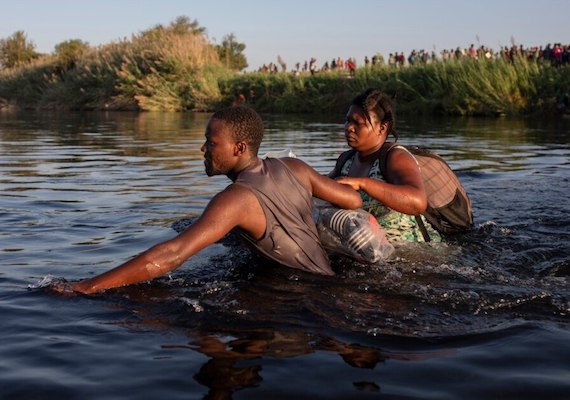
The United States is flying Haitians who entered the country without permission back to their homeland. The Haitians have set up a camp in a Texas town near the U.S. border. The operation appears to be the beginning of what could be the country’s largest expulsion of migrants or refugees in many years. U.S. officials are seeking to expel many of the more than 12,000 migrants who have camped around a bridge in Del Rio, Texas. They entered the United States after crossing the Rio Grande River from Ciudad Acua, Mexico. More than 320 migrants arrived in Port-au-Prince, Haiti’s capital, on three flights on Sunday. Haiti said six flights were expected Tuesday. The U.S. plans to begin seven expulsion flights each day on Wednesday, said a U.S. official who was not permitted to discuss the situation publicly. Flights will continue to depart from San Antonio Officials may add El Paso, the official said. Large numbers of Mexicans have also been sent home during years of high migration, but they were sent over land and not so quickly. When the border was closed Sunday, the migrants found other ways to cross nearby until they were met by federal and state law enforcement. An Associated Press reporter saw Haitian migrants still crossing the river into the U.S. about 2.4 kilometers east of the earlier place. After a time, they were stopped by Border Patrol agents riding horses and Texas law enforcement officials. Agents shouted at the migrants who were crossing the river to get out of the water. The several hundred who had successfully crossed sat on the U.S. side of the river. They were ordered to the camp in Del Rio. Mexican officials in a boat told others trying to cross to go back into Mexico. Migrant Charlie Jean had crossed back into Mexico from the camps to get food for his wife and children. “We need food for every day. I can go without, but my kids can’t,” said Jean. He had been living in Chile for five years before beginning the trip north to the U.S. It was unknown if he made it back across and to the camp. Mexico said Sunday it would also begin returning Haitians to their homeland. A government official said the flights would be from towns near the U.S. border and the border with Guatemala, where the largest group remains. Some of the migrants at the Del Rio camp said the killing of President Jovenel Mose make them afraid to return to the country. “In Haiti, there is no security,” said Fabricio Jean, a 38-year-old Haitian who arrived in Texas with his wife and two daughters.
What is a migrant?
a person who serves in an army
a person who owns or manages a farm
a person who moves from one place to another, especially in order to find work or better living conditions
a person who greets people entering a store, church service, or other public place
In which American state are many of the Haitian migrants camped?
Texas
Montana
Colorado
Florida
Agents shouted at the migrants who were crossing the river to get out of the water.
water
grass
sand
sky