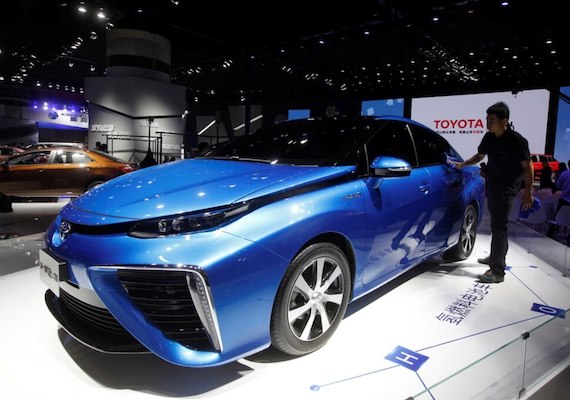
Several big automakers recently announced plans to keep investing in hydrogen vehicle technology. The plans come even as many industry experts believe the technology faces a major uphill battle to compete against battery-powered electric cars. Hydrogen-powered cars are also known as fuel cell electric vehicles, or FCEVs. With these vehicles, fuel cells convert hydrogen gas into electricity. This differs from electric vehicles, or EVs, which get their power from a built-in battery. Last month, the chief of Japan’s Toyota Motors, Akio Toyoda, attended a race that demonstrated an experimental hydrogen vehicle. The vehicle contained a traditional gasoline-powered engine that had been converted to run on hydrogen. Toyoda told reporters at the event such conversions could keep traditional internal combustion engines running in a carbon-free world. This, he said, could avoid the need to completely leave behind internal combustion and save millions of auto industry jobs.
What does experimental mean?
based on untested ideas or techniques and not yet established or finalized
impervious to water
capable of operating on a cellular network
a usual or ordinary thing
What is a major competitor of hydrogen cars?
battery-powered electric cars
horses
blimps
tricycles
This, he said, could avoid the need to completely leave behind internal combustion and save millions of auto industry jobs.
music
jobs
lemons
movies