A new study suggests that severe storms are likely to start affecting wider areas that include cities like New York, Boston, Beijing and Tokyo. An international research team predicts that big atmospheric storms called tropical cyclones could move further to the north or south. It said this is because of the effects of planet-warming climate change. The U.S. National Oceanic and Atmospheric Administration describes tropical cyclones as “organized systems of clouds and thunderstorms” that develop over bodies of water. Major tropical cyclones are declared either hurricanes or typhoons, depending on where the storms happen. In the North Atlantic, central North Pacific and eastern North Pacific, the term hurricane is used. In the Northwest Pacific, the storms are called typhoons. The researchers suggest that hurricanes and typhoons could start appearing farther north in the northern half of the world and farther south in the southern half of the world. Those areas contain larger population centers that traditionally are not struck by large hurricanes or typhoons. Joshua Studholme is a physicist at Yale University’s Department of Earth and Planetary Sciences. He was the lead writer of the study, which recently appeared in Nature Geoscience. Studholme said in a statement the study “represents an important, under-estimated risk of climate change.” “This research predicts that the 21st century’s tropical cyclones will likely occur over a wider range of latitudes than has been the case on Earth for the last 3 million years,” he added.
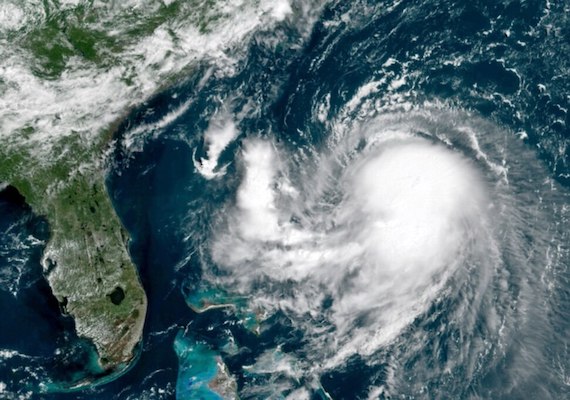
What is a hurricane?
a storm with a violent wind, in particular a tropical cyclone in the Caribbean
a cylindrical stick of striped, sweet candy with a curved end, resembling a walking stick
a walking stick
an expression of joy or approval
When a tropical cyclone occurs in the Northwest Pacific ocean, what is the storm called?
typhoon
tornado
earthquake
tsunami
It said this is because of the effects of planet-warming climate change.
climate
dancing
coffee
climber