Technology companies are raising hundreds of millions of dollars to develop farm products that use microbes and seaweed to grow crops. The move comes at a time when fertilizer prices are very high and increased attention is being paid to how food is produced around the world. Microbes, including fungi and viruses, have been available for years as treatments to protect plants from insects and disease, with mixed results. But developers are increasingly using them as natural ways to support crops while keeping up crop production levels. The new microbial fertilizers are sometimes called biostimulants. Such products could help farmers use less nitrogen a fertilizer that can pollute waterways and create nitrous oxide, a gas that has environmental effects. Canada wants to cut fertilizer emissions by 2030, while the European Union aims to reduce fertilizer usage. Denmark-based Novozymes is one of the biggest sellers of biological agriculture products. One product contains a fungus that grows alongside plant roots and releases phosphate, a crop nutrient, from the soil. Yara International of Norway says its biostimulants are based on seaweed and other substances. Another product from the startup Pivot Bio has microbes that take in sugar from the roots of corn, wheat, or sorghum plant, producing an enzyme that changes nitrogen to ammonia, a crop nutrient. The California-based company says farmers use it on more than 400,000 hectares. It has also raised $430 million last year from investors. AgFunder said investments in biostimulant and crop control products have more than doubled in 2021 from the previous year, to $777 million. And Rabobank expects the $3 billion biostimulants industry to grow by 12 to 15 percent each year over the next five years.
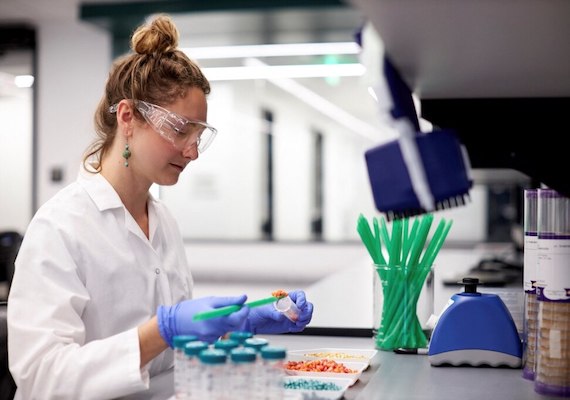
What is a definition of the word fertilizer?
a chemical or natural substance added to soil or land to increase its fertility
a powerful tractor with a broad upright blade at the front for clearing ground
the process of voting in an electio
a marriage ceremony
What are the new microbial fertilizers sometimes called?
biostimulants
little fungus
macroeconomics
seaweed
The California-based company says farmers use it on more than 400,000 hectares.
farmers
dancers
swimmers
skaters