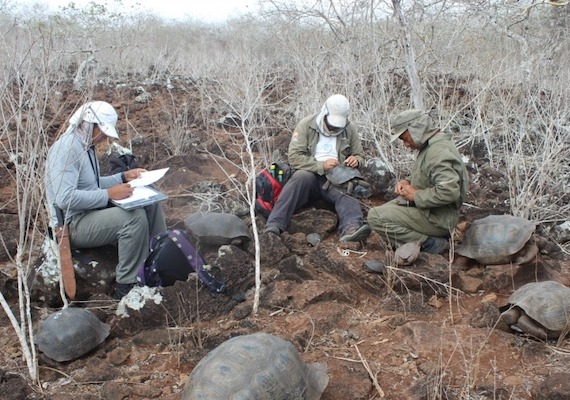
Scientists have discovered that a giant tortoise on one of Ecuador's Galapagos Islands is really a new species that had been misidentified earlier. Ecuador’s Galapagos National Park announced the findings from a recent study. Researchers from Newcastle University in England, Yale University in the United States, and the Galapagos Conservancy, an American non-profit group, carried out the study. The researchers said the giant tortoises living on San Cristbal Island had been identified with the scientific name of Chelonoidis chathamensis. But the researchers now recognize them as genetically different species, the park said in a statement. "The scientists concluded that nearly 8,000 tortoises which exist today on San Cristobal are not Chelonoidis chathamensis," park officials said. They added that the tortoises appear to be a completely new lineage that has yet to be described. Researchers made the discovery through a genetic comparison of the animals with a sample from the already described species.
What is a definition of the term lineage?
the line of ancestors of a living thing
personal belongings packed in suitcases for traveling
a group of people including a suspect for a crime assembled for the purpose of having an eyewitness identify the suspect from among them
the hard protective outer case of a mollusk or crustacean
Which country are the Galapagos Islands a part of?
Ecuador
Peru
Brazil
Belize
But the researchers now recognize them as genetically different species, the park said in a statement.
statement
dance
sandpaper
startled