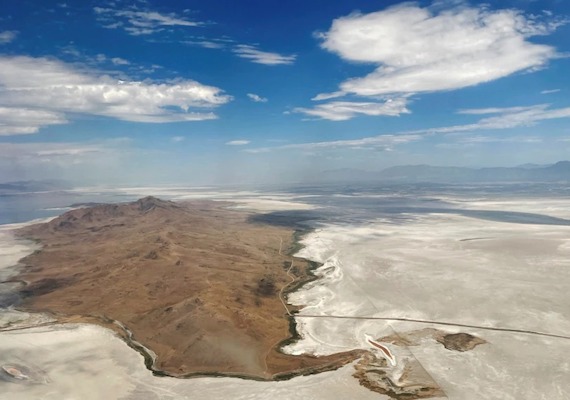
The surface of Utah's Great Salt Lake dropped to its lowest recorded level this July. Researchers and politicians are worried about serious threats to animals and people who live near it. The nearby city of Salt Lake City is already facing dust storms. Experts fear these storms, which blow dirt into the air, could get worse. Scientist Kevin Perry has studied the lake for years. He said, "To save the Great Salt Lake, so that we don't become Dust Lake City, is to make a…choice that the lake is valuable and that the lake needs to have water put into it." For years, water that would have gone to the lake has been used for drinking water, industry and agriculture. In addition, an ongoing drought a long period of time with not enough rain - has reduced the lake’s water level. On July 3, U.S. Geological Survey (USGS) said that the surface of the lake fell to the lowest level since records began in 1847. Water levels are expected to decrease further until the autumn or early winter. The lake now contains about one-fourth of the water it contained when it was at its highest level in 1987. The lake has lost nearly half its average surface area. This means about 2,000 square kilometers of lakebed have been exposed.
Which of the following is a definition of the word exposed?
not covered or hidden
taken without permission
having or showing a modest or low estimate of one's own importance
feeling or showing an appreciation of kindness
What does USGS stand for?
United States Geological Survey
Uncle Sam's Great Salt
Ultra Serious Globe Studies
Updated Status Gone Skiing
Water levels are expected to decrease further until the autumn or early winter.
winter
winner
whiner
wider