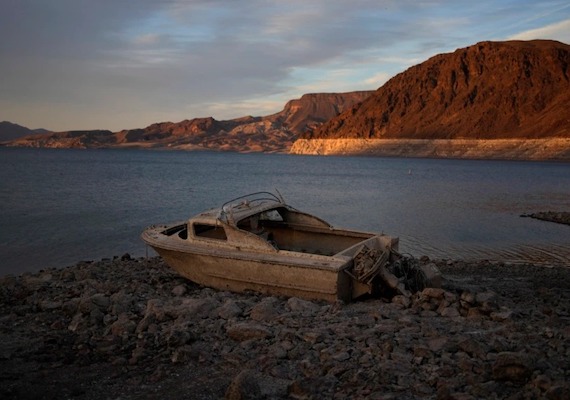
The American states of Arizona and Nevada will again face cuts in the amount of water they can draw from the Colorado River. Federal officials announced the cuts this week as the western states are experiencing extremely dry weather conditions. The cuts planned for next year will force states to decide where and how to reduce water usage. The decision will put more pressure on the states with a growing population in a hotter, drier future. “We are taking steps to protect the 40 million people who depend on the Colorado River for their lives and livelihoods,” said Camille Touton. She leads the U.S Bureau of Reclamation which oversees water policy for the river. The Colorado River provides water across seven American states and Mexico. Its water helps support an agricultural industry valued at $15 billion a year. The federal estimates of the water levels will also determine how much states and cities can draw for their water supply. In addition to those cuts, the Bureau of Reclamation said Tuesday that states had missed a deadline to propose at least 15 percent more cuts needed to keep the water levels at the lakes, or reservoirs, from dropping even more. For example, officials have predicted that water levels at Lake Mead, the nation’s largest reservoir, will drop severely. The lake is currently less than a quarter full.
Which of the following is a definition of the word determine?
to officially decide something because of evidence or facts
to extract minerals from the earth
to discourage
to postpone
Which lake is the largest reservoir in the United States?
Lake Mead
Lake Monroe
Lake Marsh
Lake Mary
The Colorado River provides water across seven American states and Mexico.
River
Ranger
Rover
Spider