When Rylae-Ann Poulin was 1 year old, she did not crawl or make noises like other kids her age. A rare genetic disease prevented her from even lifting her head. Her parents took turns holding her all night to ease her breathing and help her sleep peacefully. But months later, doctors in Taiwan treated the young patient’s brain directly, attacking the disease with genetic medicine. Now the 4-year-old is walking, running, swimming, reading and riding horses. Rylae-Ann lives with her family in Bangkok, Thailand. She was accepted into a medical trial for a new method of gene therapy. Experts say the treatment holds great promise for treating several brain diseases. The method was approved in Europe and the United Kingdom for a condition called AADC deficiency. The disorder damages communication systems among nervous system cells. American drug company PTC Therapeutics plans to seek U.S. approval for the treatment this year. The National Institutes of Health (NIH) says there are about 30 studies underway in the United States right now to test gene therapy to the brain. The studies target a number of diseases. Dr. Krystof Bankiewicz at Ohio State University leads one such study on AADC deficiency. Others test treatments for brain diseases like Alzheimer’s, Parkinson’s and Huntington’s. Difficulties remain, especially with diseases caused by more than a single gene. But scientists say evidence is growing in support of gene therapy to the brain. “There’s a lot of exciting times ahead of us,” said Bankiewicz, a brain surgeon. “We’re seeing some breakthroughs.”
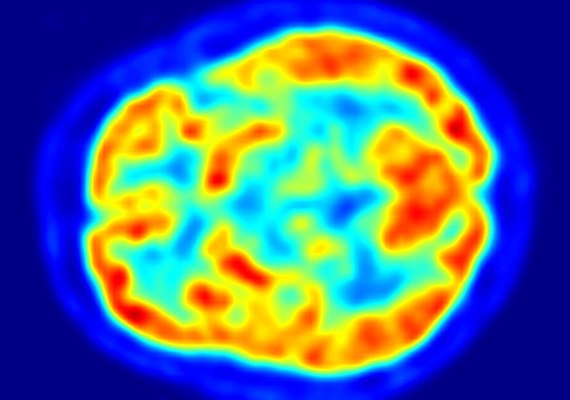
Experts say the treatment holds great promise for treating several brain diseases.
brain
drain
crane
lane
Which of the following is a definition of the word breakthrough?
a sudden increase in knowledge, understanding, etc.
the end of a relationship
the two-hundredth anniversary of a significant event
a person who rides a bicycle
According to the National Institutes of Health, roughly how many studies are underway in the U.S. to test gene therapy to the brain?
thirty
forty
fifty
sixty