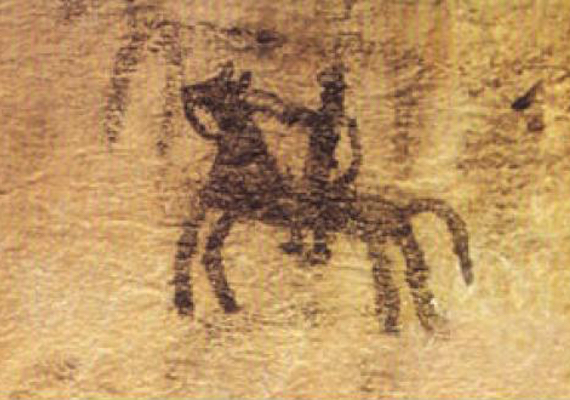
Researchers have found the earliest direct evidence for horseback riding. The evidence comes from 5,000-year-old human skeletons in central Europe. The research study was published last week in the publication Science Advances. Horseback riding was a development that changed history. It was “the fastest a human could go before the railroads,” said David Anthony. He is a co-writer of the study and an archaeologist at New York’s Hartwick College. The researchers examined the bones of more than 200 ancient people in museum collections in Bulgaria, Poland, Romania, Hungary and the Czech Republic. The bones came from the period known as the Bronze Age between 3,000 and 5,000 years ago. The researchers looked for signs of “horse rider syndrome.” Martin Trautmann, another writer of the study, explained the condition. He said there are six markers that show whether a person rode an animal. They include wear marks on the hips, thigh bone and pelvis, said Trautmann, an anthropologist at the University of Helsinki in Finland. The researchers identified five humans who likely rode horses. They are estimated to have lived between 4,500 and 5,000 years ago. They belonged to a Bronze Age people called the Yamnaya.
Which of the following is a definition of the word museum?
a building in which objects of historical, scientific, artistic, or cultural interest are stored and exhibited
a body of a human being or animal that has been ceremonially preserved
a device to send signals between computers
the present state
During which time period did the bones in this discover come from?
the Stone Age
the Medieval Age
the Bronze Age
the Copper Age
The researchers identified five humans who likely rode horses.
houses
horses
forces
rocks