Most people are born with two sets of teeth. They use baby teeth to break down food as children. As they become adults, the baby teeth are replaced with permanent or adult teeth. By age 65, 30 percent of all people worldwide have lost all their teeth.
But most bony fish can regrow their lost teeth. A team of scientists is wondering if that ability of some fish could somehow lead to human tooth regeneration, with adult men and women producing additional teeth as needed.
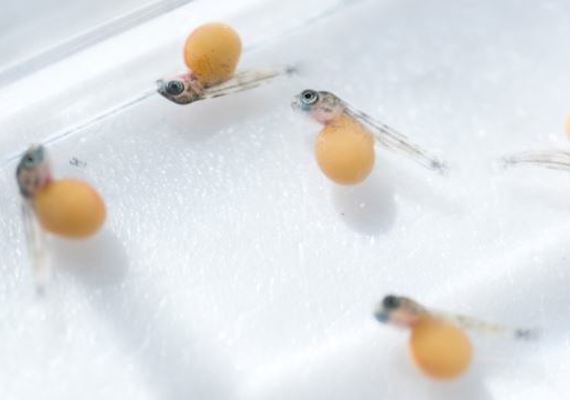
Fish do it all the time. Whenever they lose a tooth, a new one drops into place. Cichlids are a popular tropical fish. They keep their teeth throughout adulthood. If a tooth should fall out, another one takes its place. Todd Streelman teaches biology at the Georgia Institute of Technology in Atlanta. He is working with cichlids to find out which genes help the fish keep their teeth.
Our approach is to find things that are hard to study otherwise and then target them in these animals. So in this case, Lake Malawi cichlid fishes and many other fishes regenerate their dentition throughout their entire life. As a result, a mouthful of teeth is replaced every 50 days. Professor Streelman and his team reported on their study of cichlids in the journal Proceedings of the National Academy of Sciences. They looked at embryotic cell tissue that can develop into either teeth or taste buds.
And what we found were some really interesting commonalities between teeth and taste buds at their earliest development.