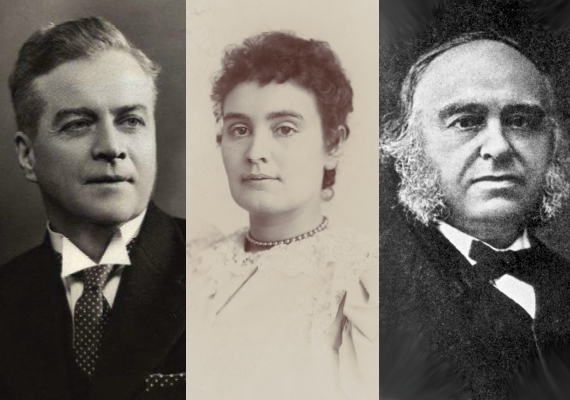
What do Anne Sullivan, Paul Broca, and Karl Wernicke have in common? All three individuals contributed to the field of speech and language.
Anne Sullivan is best known as the caretaker and teacher of Helen Keller. For more than 49 years, she served as a teacher, instructor and friend to Keller. Despite her own disability - Sullivan was blind - she taught Keller to read, write, and communicate. Keller and Sullivan remained close friends until Sullivan’s death in 1936.
Paul Broca is praised for his discovery of the speech production center of the brain. By studying the brains of aphasic patients, Broca was able to diagnose the communication disorder more accurately. Today, this part of the brain is named after Broca.
Shortly after Paul Broca published his research, Karl Wernicke began researching the effects of brain damage on speech.
Wernicke noted that not all deficits were caused by damage to Broca's area. Rather, Wernicke found that damage to a different part of the brain resulted in language and comprehension deficits. This region is now referred to as Wernicke's area.
Today, Broca’s aphasia is referred to as Expressive aphasia. Wernicke’s aphasia is often called Receptive aphasia.
While all working on different outcomes, the research and life experiences of all three individuals shaped the speech and language industry.
Today, we salute these speech heroes.